Why You Should Be on Postcard
December 2025
My name is Kai and I am building Postcards by Atlas. Postcards is a social networking app intended for travelers to connect, share travel advice and facilitate new adventure discovery. A problem that I’ve observed from using other social media apps is that posts appear exclusive and show off to other users. I want to build a platform where creators can post their travels and make it accessible to users if they wish to have a similar experience. Posted content should feel tangible and not out of reach. Using our map-first discovery engine, I want users to be able to see other travel content wherever they choose to zoom in on this map. Through a map-discovery first feed, we are able to minimize the social media slop, provide relevant content and tell the journey of how that photo came to be. Today, more people are buying experiences instead of material goods, and want to have authentic cultural immersions when traveling. Cultural adventures cannot be obtained from simply buying a tourist sightseeing package; adventure comes from the organic discovery of experiences. If you are interested in participating in Postcards closed beta testing, please message me on Instagram (@kaimaiphotography) or email me at kaispostcards@gmail.com.
Introduction - Who am I and what is Postcards?
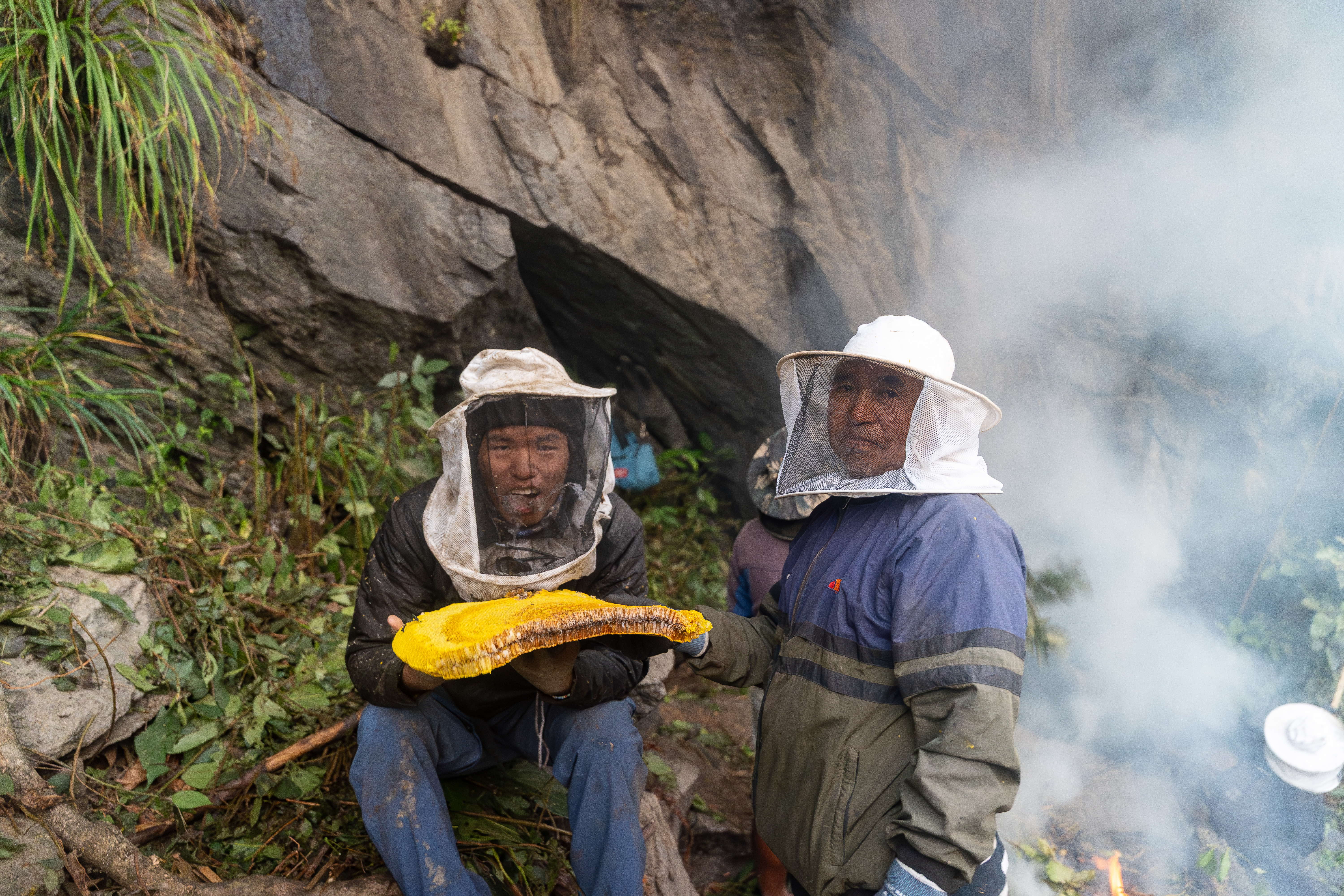
You can read my full introduction and motivations for starting Postcards in a previous blog post “An Adventure Photographer’s First Steps into Entrepreneurship”. I am about to turn 23, just graduated from the University of Pennsylvania, and have been solo traveling Nepal the past 4 months. I am an adventure photographer and have visited much of Nepal’s beautiful landscapes such as the Chitwan safari, the Everest Himalayan region, and the remote Annapurna region where villagers harvest psychedelic mad honey. When I booked the one-way ticket to Nepal, I didn’t know what to expect but was very lucky to have met trustworthy people online prior to my arrival. Without meeting them, my stay in Nepal would’ve been lackluster and I would have been lonely. Life is an adventure and quite often, the unplanned experiences are what brings back the most memories. Spontaneity. Risk-taking. You only live once. That is the ethos of my life.
From my own experience of reaching out to strangers from totally different countries and shared experiences, I noticed that travel discovery and travel connection are fragmented online. When someone purchases a travel itinerary such as a cruise or a trekking package, are they really embarking on their own adventure? I have no qualms against the tourism agency industry and will be starting my own, but I believe that structured itineraries and pre-planned packages go against the ethos of the solotraveler. A year ago, the entrepreneurial adventurer in me said “Fuck it, I’m booking this one-way ticket to Nepal. I don’t care that I cannot afford the return flight. I don’t care that I know nothing about this country. I don’t care that I’m giving up a traditional career in finance, consulting or tech that my other UPenn peers enjoy!”. I want to capture that bravado, that essence that all adventurers have.
Postcards facilitates adventure and channels this organic discovery to users. Wouldn’t it be cool if instead of a infinite doomscroll feed that Instagram has, we can pick locations on a map, find friends and others that have traveled there before, and pursue our own adventures? Postcards will guide the user in their own adventure-crafting, offering the user insight into what others have done in the past without the societal pressure of having to show off your travels. I want Postcards to help solo travelers like me build their own adventures and connect with other like-minded people.
The problem: what’s broken with travel + social media today
Problem 1: Social media algorithms reward aesthetics and retention, not truth
Given the short-form content that we see from TikTok, Instagram Reels and YouTube Shorts, content has been engineered to farm likes within an extremely short amount of time, often without substance or any tangible learnings. People post highlight reels of their travels, but these reels fail to encapsulate the entire experience. For example, half of hiking content that I see online is just cool aesthetic mountains, a sunset in the background and a caption like “Why work a 9-5 when mountains like these exist?”. Not trying to hate on inspirational travel content, but I also want to understand the context behind those photos. How did the traveler get to that hiking vista? What was the buildup? If only we could see the photos leading up to that perfect spot, we can tell a better story of one’s adventure.
Problem 2: SEO travel content is homogenized and is optimized to sell you experiences, not help you create your own adventures
If I go on Google and search “best treks to do in Nepal”, my search results are flooded by hundreds of trekking/expedition company websites, TripAdvisor, Booking.com, and hospitality websites. Only through Reddit and travel blogs do we get more authentic suggestions on where to go, what viewpoints are nice, the gear required, etc. There has to be a better photo + text medium that allows users to learn about travel without going through the endless advertising by companies. If everyone searches up “Top 10 things to do in Nepal”, is there really any variance in the search results? Discovery for everyone has become homogenized, influenced by companies who pay top-dollar to be on the front page of the search results.
Problem 3: Finding travel partners is risky and a hassle
I have zero trust for travel companion apps, because these apps are designed to help you find travel companions, but due to bad players, it gets sketchy at times. Even on Instagram and TikTok, I get random DMs from people with no profile picture saying “Hey Brother, let’s be friends and I can show you around Kathmandu. Just let me know”. Nawww bruh, I’m not texting you back. An Instagram profile is often used as a proxy to gauge if someone is trustworthy or matches your vibe. In fact, it has been used for vetting Hinge dates, and other nuances that you don’t get from a person from just a text conversation. The optimal travel companion app is an app that is not specifically for finding travel companions, but rather is a platform where people share travel content and discuss amongst themselves, and let conversations and connections form organically.
The solution: Postcards’ philosophy
Solution 1: Map-first discovery and community building
Postcards’ proposition is that map-first discovery and travel content sharing via friends and mutuals is better than current-day social media doomscroll algorithms. Instagram and TikTok sucks users into doomscrolls on polarizing content, feel-good content, and other random niches. Postcards is designed to expose travel ideas to users, and upon further delving, users can find new itineraries, make their own adventures and find other users’ past adventures. In addition, pushing the creator profile as much as we promote the content they post is another way of facilitating messaging and community-building. Instagram’s platform seems more conducive to parasocial relationships where many people follow a certain creator but the creator does not know who their followers are, and is instead broadcasting their lives into the social media void. Of course, in all social media apps, as your following increases, you cannot interact with each follower as much as you did before, and the relationship thus becomes increasingly parasocial.
Solution 2: Itineraries and destination reviews are favored content
Postcards will promote users’ itineraries, destination reviews, notes on hikes and niche cultural content. I want Postcards to be as informative and context-sharing as it is aesthetic and performative. Through the sharing of itineraries, users are better informed on other people’s experiences and due to an online profile, more credibility and trust is built. Relationships are formed over the sharing of ideas, similar to popular writing platforms like Substack and Medium. All photos posted will be geo-tagged to the exact location, and sequences of photos taken during that trip will be promoted together, allowing others to see snapshots of one’s entire travel experience.
Solution 3: Niche cultural exploration gets discovered organically, not homogenized travel content
Due to a map-first search engine, if you zoom into any location hard enough, you are bound to see niche content from that area. I had always been inspired by Google Street View because no matter where you drop the little orange guy, you will see an unflattering snapshot of the location where the Google car went. The snapshots that Google Street View provides aren’t designed to be aesthetic and aren’t engineered to generate likes; they are simply raw photos that represent what that location is and what it looks like. Similarly, I am inspired by GeoGuessr which gamifies Google Street View and is a good example on how these raw photos have more characteristics than what meets the eye. I want Postcards to fit somewhere in between raw Google Street View snapshots and the performative aesthetics of Instagram. Postcards will go through a user’s camera roll, and with their permission of course, obtain all geo and time meta data of one’s travel photos, and create a carousel snapshot of their trip. In future iterations of Postcards, users can filter their map by food, culture, hiking, and specific activities. That way, Postcards can support different user preferences and not simply the hardcore solotraveler that goes on treks (me).
Conclusion
In a future article, I will write more on Postcards’ map-first search engine and how I plan to design the actual search, filtering process, and content promotion strategies. That is a difficult problem in of itself, and is worth writing a deep dive research paper on. As with any social media platform and business, monetization and audience retention are factors that I must consider, and I plan to revisit this topic down the road as the product is built. Dear reader, I hope that after reading this, you have a better idea on the ethos of Postcards, the problems that I encountered on other social media apps, and develop your own curiosity into how we can facilitate connection through Postcards.